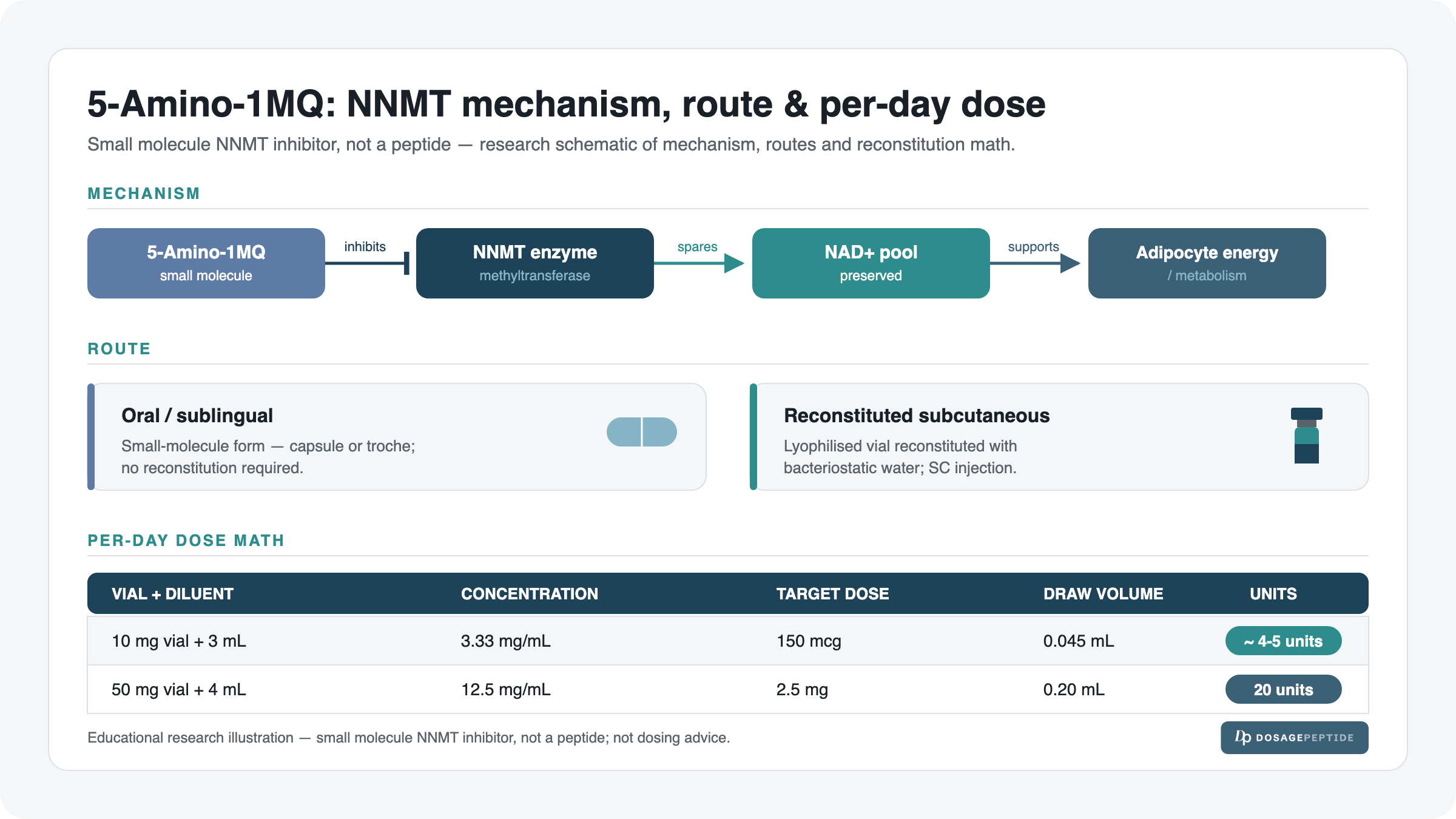
5-amino-1mq dosage oral vs subcutaneous injectable Dosage: How Much Per Day, Injection & Protocol 5-amino-1mq oral vs. injectable ·
Description
Its role in research is limited to analytical and observational study conducted exclusively within controlled experimental systems

Additionally, analogues containing the quinolinium scaffold lacked inhibitory activity against enzymes in the NAD + salvage pathway that bind nicotinamide-containing substrate, including NAMPT[27, 32] and the NAD + -dependent SIRT1 enzyme, which deacetylates NAD + to produce NA, a product inhibitor of SIRT1.[33] These results suggest that quinolinium-based NNMT inhibitors achieve selectivity by specifically interacting with the NA-binding pocket of NNMT,[17] unlike several known non-selective methyltransferase inhibitors that interact with the SAM-binding pocket, which is highly conserved among SAM-dependent methyltransferases.[34, 35] Membrane-permeable NNMT inhibitors reduced intracellular 1-MNA levels in a concentration-dependent manner and at pharmacologically relevant concentrations that did not impact cell viability, suggesting these small molecules interact directly with NNMT in cells

Syringe units assume a 10 mg vial mixed with 1 mL of bacteriostatic water (10 mg/mL)

One 10 mL bottle covers three vials with margin
The Science 5-Amino-1MQ is a small molecule NNMT (nicotinamide N-methyltransferase) inhibitor that influences cellular energy metabolism by modulating the methylation of nicotinamidea key component in NAD+ synthesis and cellular energy production

The science of metabolism has evolved, focusing on things like enzyme regulation and mitochondrial performance


